
High-Voltage
Regulating & Stabilizing
Transformers
Wenfei's high-voltage regulating and stabilizing transformers deliver precise voltage control and power quality for industrial grids, substations, and critical infrastructure--trusted across 40+ countries.

Why Choose HV Regulating?
Essential for power grids, substations, and voltage-sensitive industrial processes
Precise Regulation
±1% voltage accuracy with automatic tap-changing or manual control for stable grid operations
High-Voltage Capacity
6kV to 35kV voltage ratings, supporting transmission lines, industrial substations, and power distribution
Power Stabilization
Compensates for grid fluctuations, ensuring consistent voltage for sensitive manufacturing and data centers
Cost Efficiency
Reduces equipment damage from voltage spikes, lowers energy waste, and extends grid infrastructure lifespan
Our HV Regulating Product Line
Comprehensive range for substations, industrial grids, and voltage-critical applications
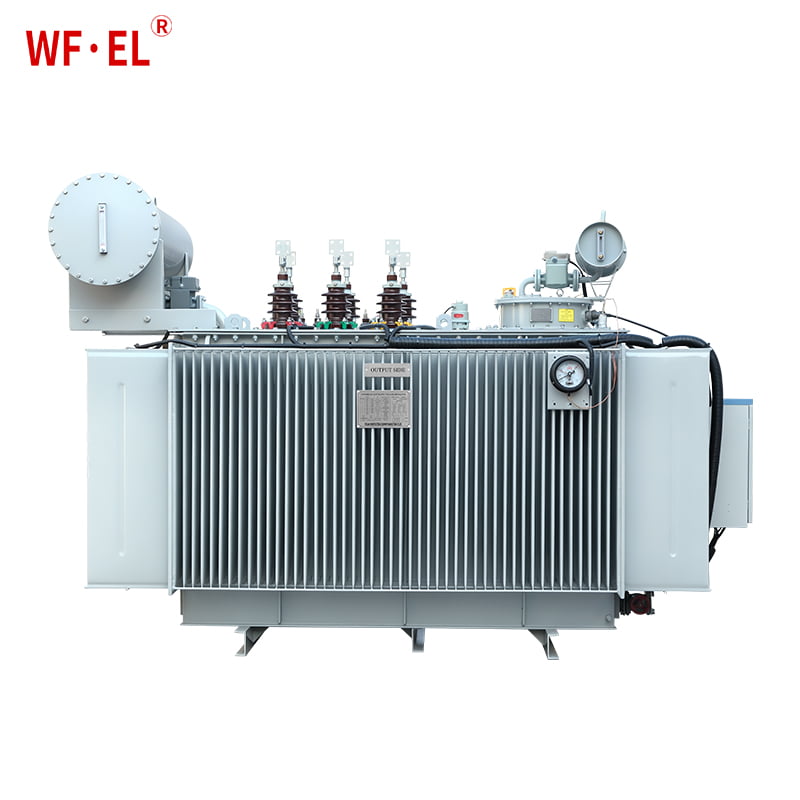
Technical Comparison
Choose the right transformer based on your voltage regulation needs
| Specification | Standard Transformer | HV Regulating | Voltage Stabilizer | SVR Transformer |
|---|---|---|---|---|
| Voltage Regulation | Fixed ratio | ±10% adjustable | ±15% auto | ±20% stepless |
| Voltage Range | 0.4 - 10 kV | 6 - 35 kV | 0.22 - 10 kV | 0.4 - 10 kV |
| Response Time | N/A | <2s (OLTC) | <0.5s | <0.02s |
| Regulation Accuracy | N/A | ±1% | ±2% | ±0.5% |
| Efficiency (Full Load) | 98.5% | 98.0% - 99.0% | 97.5% | 99.0% |
| Tap Positions | Fixed | 9 - 33 steps | Auto (servo) | Continuous |
| Maintenance Interval | 5 years | 2-3 years | 1-2 years | 3 years |
| Installation Cost | Low | High | Medium | Very High |
| Best For | General power | Substations, Grids | Factories, Buildings | Precision equipment |
Technical Specifications
Key features of Wenfei high-voltage regulating transformers
On-Load Tap Changer (OLTC)
9 to 33 tap positions with automatic or manual control, enabling voltage adjustment under full load without interruption
Oil-Immersed Design
Class A insulation oil with BIL 95-200 kV impulse withstand, IP23-IP54 protection for outdoor substation installations
Wide Regulation Range
±10% voltage adjustment (some models ±15%) with ±1% accuracy, compensating for grid fluctuations and seasonal load variations
Advanced Monitoring
Built-in temperature sensors, oil level indicators, and optional SCADA integration for remote monitoring and predictive maintenance

Ideal Applications
Where high-voltage regulating transformers excel
Power Substations
Transmission and distribution substations--maintaining grid voltage within ±5% tolerance for reliable power delivery
Industrial Facilities
Steel mills, chemical plants, mining operations--compensating for heavy motor loads and arc furnaces that cause voltage sags
Critical Infrastructure
Data centers, hospitals, rail systems--ensuring stable voltage for UPS systems and sensitive electronic equipment
High-Voltage Regulating and Stabilizing Transformer FAQ
Expert answers to high-voltage regulation and stabilization questions
What are the typical applications for high-voltage regulating and stabilizing transformers?
Common Applications:
- Power Distribution Networks: Substations requiring voltage regulation from 6kV to 35kV systems
- Industrial Parks: Large manufacturing facilities with fluctuating loads (500-5000 kVA)
- Mining Operations: Remote sites with unstable grid supply, heavy motor loads
- Rail Transit: Metro systems, high-speed rail traction substations (10kV-35kV)
- Renewable Energy: Wind and solar farms requiring grid voltage matching and stabilization
- Data Centers: Critical facilities demanding ±1% voltage precision for UPS systems
💡 Tip: High-voltage regulators maintain stable output voltage despite ±15-20% input fluctuations, protecting sensitive equipment and improving power quality across entire distribution networks.
How do I select the right capacity and voltage class for a high-voltage regulating transformer?
Selection Criteria:
- Determine Input Voltage Range: Measure actual grid voltage variations (min/max) over 24-hour period
- Calculate Total Load: Sum all connected equipment kVA, including transformer losses (typically 2-3%)
- Select Regulation Range: ±10%, ±15%, or ±20% based on measured input variation
- Choose Voltage Class: 6kV, 10kV, 20kV, or 35kV matching system nominal voltage
- Example: 10kV system with ±18% variation, 2000 kVA load → Select 2500 kVA, 10kV, ±20% regulator
Standard Capacity & Voltage Ratings:
- • 500-1600 kVA: 6kV/10kV class (medium industrial facilities)
- • 2000-3150 kVA: 10kV/20kV class (large factories, substations)
- • 4000-6300 kVA: 20kV/35kV class (industrial parks, power grids)
- • 8000-10000 kVA: 35kV class (regional distribution, mining complexes)
Regulation Range Selection Guide:
- • ±10%: Stable grids with <10% variation (urban areas)
- • ±15%: Moderate fluctuations (suburban industrial zones)
- • ±20%: Severe variations (remote sites, weak grids, end-of-line locations)
⚡ Note: For loads with frequent starting currents (motors, compressors), add 25-30% capacity margin. Wenfei provides free load analysis and voltage monitoring reports for optimal sizing.
What regulation technologies are available and how do they compare?
On-Load Tap Changer (OLTC) - Traditional Method
- • Principle: Mechanical switching between transformer taps under load
- • Regulation Steps: Typically ±8 steps × 1.25% = ±10% total range
- • Response Time: 5-10 seconds per step (30-60 seconds full range)
- • Advantages: Proven technology, high capacity (up to 100 MVA), robust
- • Disadvantages: Mechanical wear, requires maintenance every 100,000 operations, arc switching
- • Best for: Substation transformers, slow load variations, high-power applications
Servo Motor Voltage Regulator (SVR) - Wenfei Specialty
- • Principle: Motorized carbon brush slides along autotransformer coil for continuous adjustment
- • Regulation Range: Stepless ±15% to ±20%, output accuracy ±1%
- • Response Time: 1-2 seconds for full range correction
- • Advantages: Fast response, smooth regulation, no switching transients, handles rapid fluctuations
- • Disadvantages: Carbon brush replacement every 2-3 years, capacity limited to 3000 kVA
- • Best for: Industrial facilities with frequent voltage swings, welding plants, motor-heavy loads
Contactless Voltage Regulator - Advanced Technology
- • Principle: Electromagnetic induction with no mechanical contact, microprocessor-controlled
- • Regulation Range: ±15% to ±20%, output accuracy ±0.5%
- • Response Time: <40 milliseconds (electronic switching)
- • Advantages: Zero maintenance, 20+ year lifespan, silent operation, highest precision
- • Disadvantages: Higher initial cost (30-40% premium), complex control system
- • Best for: Critical applications (hospitals, data centers), precision equipment, long-term ROI focus
Technology Comparison (2000 kVA, 10kV):
- • OLTC: $35,000-45,000 | Maintenance: $2,000/year | Lifespan: 25 years
- • SVR: $40,000-50,000 | Maintenance: $1,500/year | Lifespan: 20 years
- • Contactless: $55,000-70,000 | Maintenance: $500/year | Lifespan: 30+ years
🔧 Wenfei Recommendation: SVR for industrial applications with moderate budgets, contactless for critical infrastructure and harsh environments. All models include microprocessor control, LCD display, and RS485/Modbus communication.
What are the key performance specifications and standards for high-voltage regulators?
Critical Performance Parameters:
- Regulation Accuracy: ±1% (industrial) to ±0.5% (precision) of set voltage
- Response Time: <2 seconds (SVR), <40ms (contactless) for full range correction
- Efficiency: 97-98.5% at rated load, <2% no-load loss
- Waveform Distortion: THD <3% (non-linear loads), output sine wave purity >98%
- Load Regulation: <1% voltage change from no-load to full load
- Three-Phase Balance: <2% voltage difference between phases under balanced load
- Overload Capacity: 120% for 1 hour, 150% for 1 minute (emergency)
- Insulation Level: BIL 75kV (10kV class), 125kV (20kV), 170kV (35kV)
International Standards & Certifications:
- IEC 60076: Power transformers - General requirements and testing
- GB/T 1094: China national standard for power transformers
- IEEE C57.12.00: General requirements for liquid-immersed distribution transformers
- IEC 60214: On-load tap changers performance requirements
- ISO 9001: Quality management system certification
- CE Marking: European conformity for export markets
Factory Testing Protocol (Wenfei Standard):
- Routine Tests: Turns ratio, voltage regulation range, phase relationship, no-load/load loss
- Dielectric Tests: Applied voltage test (2.5× rated for 1 minute), induced overvoltage test
- Impulse Tests: Lightning impulse (1.2/50 μs), switching impulse (250/2500 μs) for ≥10kV class
- Temperature Rise Test: 4-hour rated load, winding hotspot <65K (oil), <100K (dry-type)
- Regulation Performance: 100 cycles full-range operation, accuracy verification at 10 input voltage points
- Protection Tests: Over-temperature, overload, short-circuit, phase loss protection verification
Environmental & Operating Conditions:
- • Ambient Temperature: -25°C to +40°C (standard), -40°C to +50°C (special design)
- • Altitude: ≤1000m (standard), derate 0.5% per 100m above or upgrade insulation
- • Humidity: ≤95% RH non-condensing, IP23 (indoor) to IP54 (outdoor) enclosure
- • Seismic Resistance: 0.3g horizontal acceleration (Zone 8 China standard)
🌳 Quality Assurance: Wenfei high-voltage regulators undergo 72-hour continuous load testing before shipment. All units include type test reports, factory acceptance test (FAT) certificates, and 24-month comprehensive warranty with lifetime technical support.
How do I install, commission, and maintain high-voltage regulating transformers?
Installation Guidelines:
- Foundation: Reinforced concrete pad, level tolerance ±2mm, vibration isolation for indoor units
- Clearances: Minimum 1.5m front access, 1m sides/rear, 3m overhead for HV connections
- Ventilation: Natural airflow for AN cooling, forced ventilation if ambient >35°C, exhaust fans for enclosed rooms
- Grounding: Dedicated ground grid <4Ω resistance, connect tank/enclosure/neutral to ground bus with 50mm² copper
- Cable Entry: Use cable glands rated for voltage class, maintain phase spacing per IEC 60364
- Protection: Install upstream circuit breaker, surge arresters on HV side (10kA class), differential protection for ≥2000 kVA
Commissioning Procedure:
- Pre-Energization: Verify all connections, measure insulation resistance (≥1000 MΩ), check phase sequence
- No-Load Test: Energize at rated voltage, verify no abnormal noise/vibration, measure no-load current (<5% rated)
- Regulation Test: Manually adjust through full range, verify smooth operation and output voltage accuracy at 5 input levels
- Load Test: Apply 25%, 50%, 75%, 100% load, measure efficiency, temperature rise, voltage regulation
- Protection Test: Simulate over-temperature, overload, phase loss conditions, verify relay operation and alarms
- Control System: Program setpoints, deadband (±1-2%), time delay (5-10s), test automatic/manual modes
- Documentation: Record all test results, create single-line diagram, train operators on emergency procedures
Maintenance Schedule:
- Weekly: Visual inspection, check indicator lights, verify automatic regulation operation, log voltage readings
- Monthly: Infrared thermography scan (hot spots >10°C above ambient require investigation), clean air filters/vents
- Quarterly: Measure input/output voltages all phases, test manual override, inspect cable terminations for looseness
- Semi-Annually: Insulation resistance test, servo motor inspection (SVR type), carbon brush wear check (replace if <30% length)
- Annually: Full load test with temperature monitoring, verify protection relay calibration, oil analysis (oil-immersed), tighten all connections
- Every 2 Years: Disassemble servo mechanism (SVR), replace carbon brushes preventively, lubricate motor bearings
- Every 5 Years: Comprehensive testing per IEC 60076, winding resistance, turns ratio, vector group, partial discharge (if applicable)
Common Issues & Troubleshooting:
- Output Voltage Unstable: Check control circuit, verify input voltage within range, inspect carbon brush contact (SVR)
- Slow Response: Servo motor malfunction, control deadband too wide, mechanical binding in regulator
- Overheating: Overload condition, poor ventilation, harmonic currents, unbalanced phases (>10%)
- Abnormal Noise: Loose core laminations, fan bearing wear, tap changer arcing (OLTC), mechanical resonance
- Protection Tripping: Verify actual fault vs. false alarm, check CT/PT accuracy, adjust relay settings if needed
Wenfei Service & Support:
- • Installation Supervision: On-site engineer guidance for critical projects (optional service)
- • Commissioning Support: Remote assistance via video call, test procedure templates provided
- • Spare Parts: Carbon brushes, contactors, control boards stocked for 15+ years after production
- • Training: Operator and maintenance personnel training programs (on-site or factory)
- • Annual Contracts: Preventive maintenance agreements with priority response and discounted parts
- • 24/7 Hotline: Technical support +86-577-XXXX-XXXX, average response time <2 hours
🔧 Reliability: Wenfei high-voltage regulators achieve 99.7%+ uptime with proper maintenance. Expected service life: 25-30 years (OLTC/SVR), 35+ years (contactless). All products include comprehensive operation manuals in English/Chinese and lifetime technical consultation.
High-Voltage Regulating & Stabilizing
Transformer Trends for 2026
Published: January 2026
The Future of High-Voltage Voltage Regulation Technology
The high-voltage regulating and stabilizing transformer market is experiencing transformative growth in 2026, driven by increasing demand for precision voltage control in critical infrastructure, industrial automation, renewable energy integration, and smart grid modernization. As power quality becomes paramount for semiconductor manufacturing, data centers, medical facilities, and advanced manufacturing processes, high-voltage regulating transformers with sub-1% voltage accuracy and millisecond response times are essential for protecting sensitive equipment, ensuring process stability, and maximizing energy efficiency across transmission, distribution, and industrial applications.
1 Ultra-Precision Voltage Regulation
Modern high-voltage regulating transformers achieve output voltage stability within ±0.5% through advanced on-load tap changers, servo-motor control systems, and real-time voltage sensing with microprocessor-based regulation. These precision units are critical for semiconductor fabs, pharmaceutical production, precision machining, and laboratory environments where voltage deviations beyond 1% cause equipment damage, process failures, and product defects. By 2026, ultra-precision regulating transformers with automatic voltage correction and harmonic filtering are projected to dominate 70% of installations in high-tech manufacturing, medical imaging, and research facilities, reducing equipment downtime by 85% and extending sensitive electronics lifespan by 3-5 years.
2 Smart Grid Integration & Remote Management
Next-generation high-voltage regulating transformers feature integrated SCADA systems, IoT connectivity, and AI-driven predictive algorithms enabling remote voltage adjustment, load forecasting, and automated demand response. Utility operators can manage voltage profiles across entire distribution networks from centralized control centers, optimize reactive power compensation, and coordinate with renewable energy sources for grid stability. Smart regulating transformers with cloud-based analytics and digital twin simulation reduce manual intervention by 90%, improve voltage quality compliance to 99.9%, and enable utilities to defer substation upgrades by 5-8 years through dynamic voltage optimization and peak load management.
3 Renewable Energy & Microgrid Applications
High-voltage regulating transformers optimized for renewable integration provide continuous voltage stabilization despite intermittent generation from solar PV, wind turbines, and battery storage systems. These specialized units feature wide input voltage ranges (±20-40%), bidirectional power flow capability, and rapid tap-changing mechanisms that respond to generation fluctuations within 50-100 milliseconds. With distributed energy resources growing 180% annually, renewable-ready regulating transformers are essential for microgrid stability, islanded operation, and grid-connected solar farms. By 2026, over 60% of utility-scale renewable installations will deploy intelligent voltage regulators with grid-forming capabilities and seamless transition between grid-tied and autonomous modes.
4 Energy Efficiency & Loss Reduction
Advanced high-voltage regulating transformers utilize amorphous metal cores, low-loss silicon steel, and optimized winding configurations to achieve total system efficiencies exceeding 98.5% while reducing no-load losses by 60-75% compared to conventional designs. Energy-efficient voltage regulation directly lowers distribution losses, reduces cooling requirements, and minimizes carbon emissions across power networks. These high-performance units deliver payback periods under 2.5 years through energy savings alone. By 2026, ultra-efficient regulating transformers meeting IEC 60076 and DOE efficiency standards will represent 75% of new utility and industrial deployments, saving an estimated 12-18 TWh annually across global power systems.
5 Industrial-Grade Reliability & Harsh Environment Performance
Modern high-voltage regulating transformers incorporate ruggedized enclosures, IP65 protection, advanced thermal management, and seismic-resistant designs ensuring reliable operation in temperatures from -40°C to +55°C, high-humidity environments, and corrosive industrial atmospheres. Oil-immersed units with biodegradable dielectric fluids and dry-type designs with Class F/H insulation withstand extreme conditions while meeting stringent environmental regulations. These industrial-grade units are critical for mining operations, steel mills, chemical plants, offshore platforms, and transportation infrastructure. By 2026, climate-resilient regulating transformers will represent 55% of deployments in harsh industrial and utility environments, offering 30+ year service life with minimal maintenance and 99.5%+ uptime reliability.
Wenfei's High-Voltage Regulation Innovation
Wenfei Electrical's 2026 high-voltage regulating and stabilizing transformer series combines industrial-grade reliability with precision voltage control technology. Our product lineup features servo-motor and contactless solid-state regulation, automatic tap-changing mechanisms, microprocessor-based voltage sensing, and optional smart monitoring with predictive diagnostics. Supporting input voltages from 6 kV to 35 kV with regulation accuracy within ±1%, our transformers excel in power distribution, industrial manufacturing, renewable energy integration, rail transit, and critical infrastructure applications. With over 80,000 regulating units deployed across utilities, manufacturing, healthcare, and transportation sectors in 50+ countries, Wenfei is your trusted partner for precision high-voltage regulation solutions.
Explore Our Voltage Regulation SolutionsWant to stay updated on voltage regulation trends and Wenfei innovations?
High-Voltage Power Solutions
for Your Grid
Contact Wenfei's engineering team for customized high-voltage regulating transformer solutions. We provide load analysis, voltage regulation studies, OLTC configuration, and competitive quotes for substation and industrial projects worldwide.