
Dry-type Voltage Regulators
Advanced epoxy resin cast regulators for precision voltage stabilization in demanding environments.
Self-extinguishing, moisture-proof design with superior insulation performance. Engineered for indoor installations requiring high safety standards, minimal maintenance, and long-term reliability in industrial, commercial, and critical infrastructure applications.
Quick Navigation
Select a section to explore
Application
Sectors
Dry-type voltage regulators excel in indoor environments requiring clean, safe, and reliable power stabilization
High-Rise
Commercial complexes
Medical
Hospitals & clinics
Data Centers
Server infrastructure
Manufacturing
Production lines
Research Labs
Testing equipment
Education
Campus facilities
Financial
Banks & trading
Substations
Indoor distribution
Product
Series
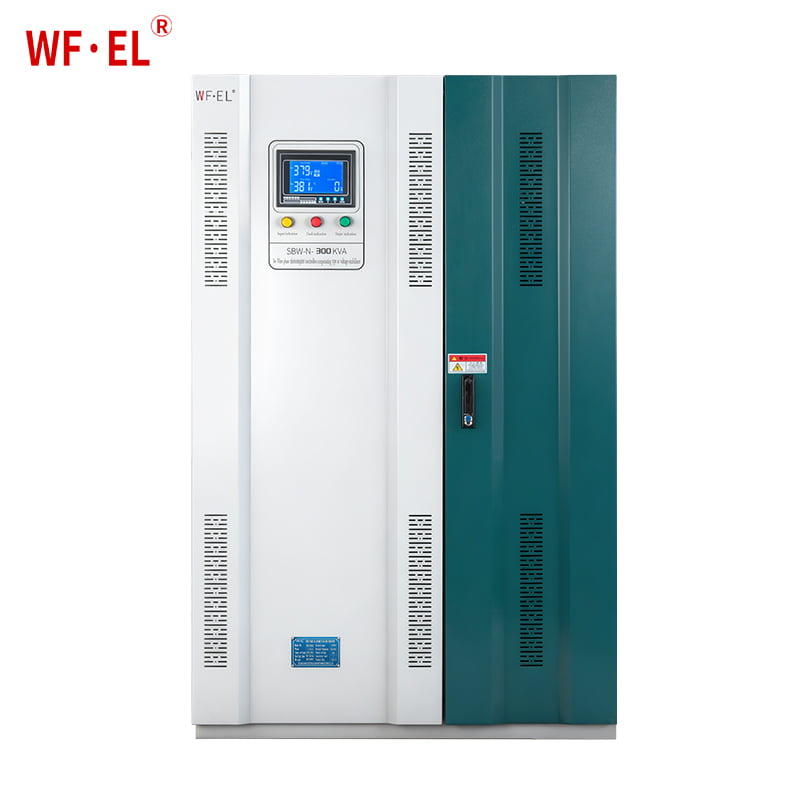
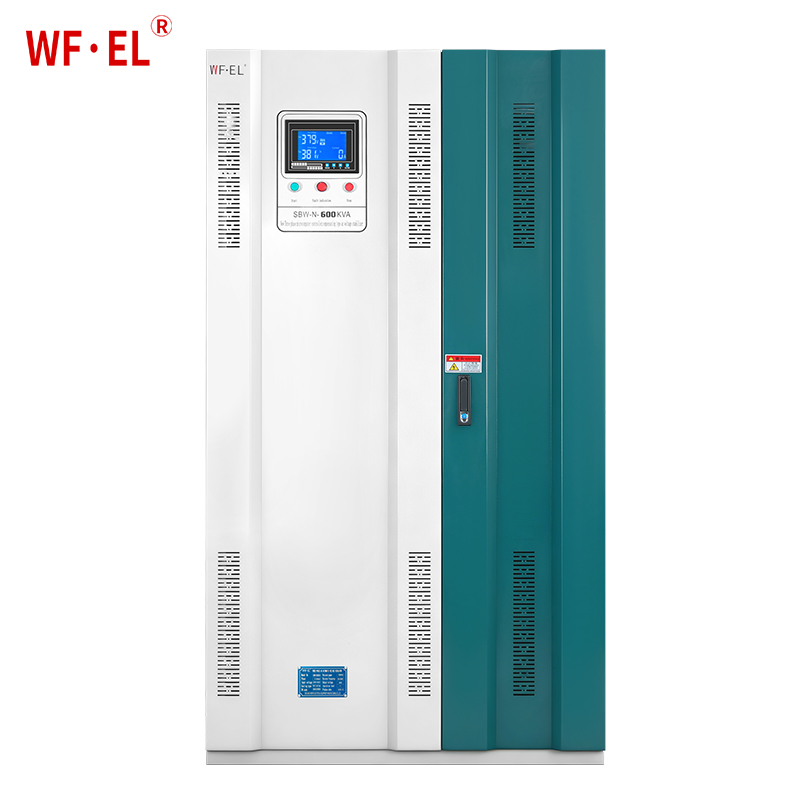
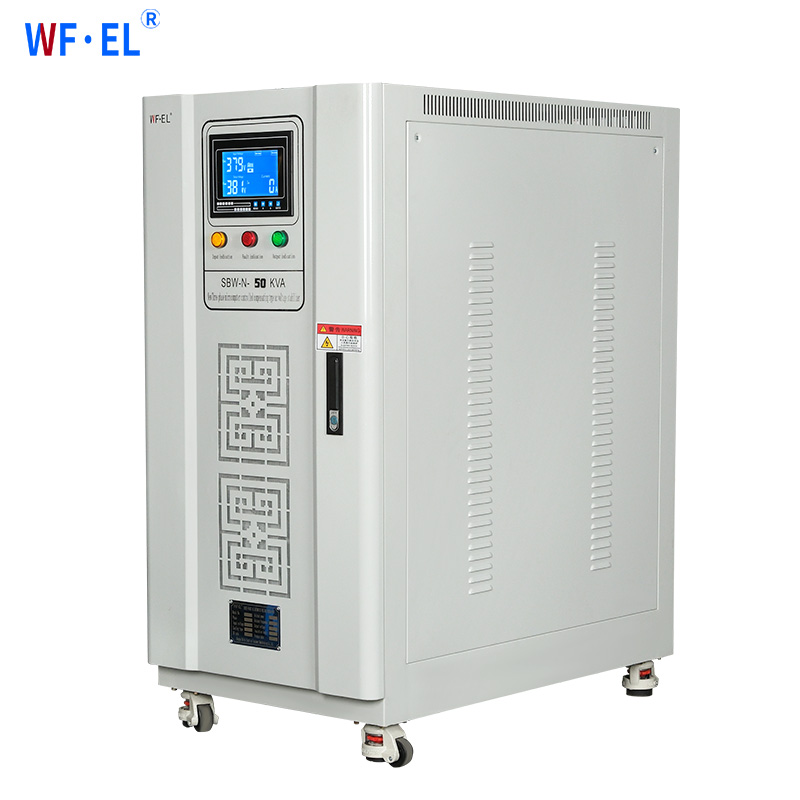
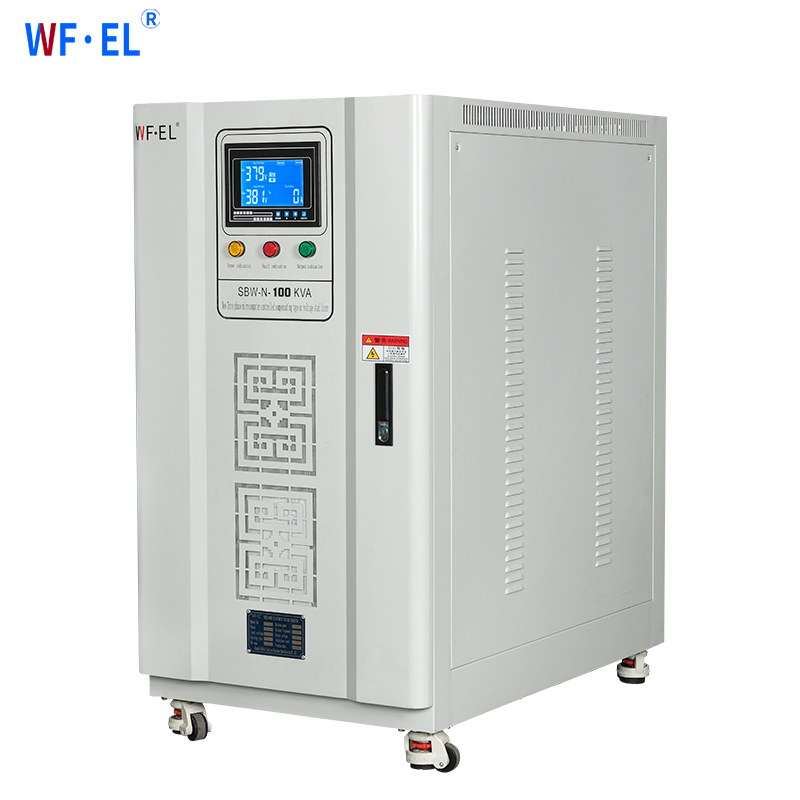
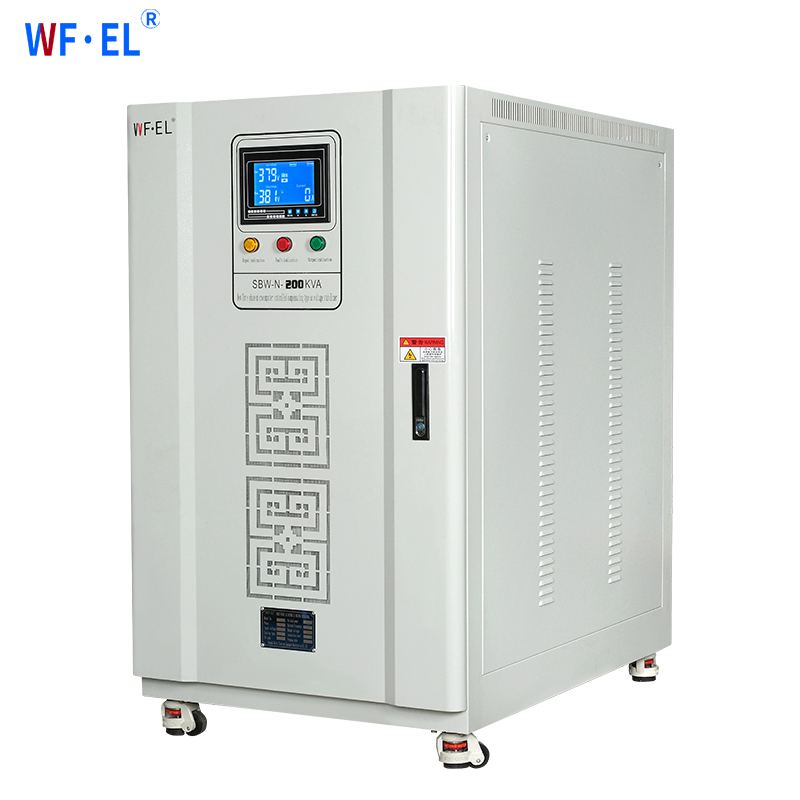
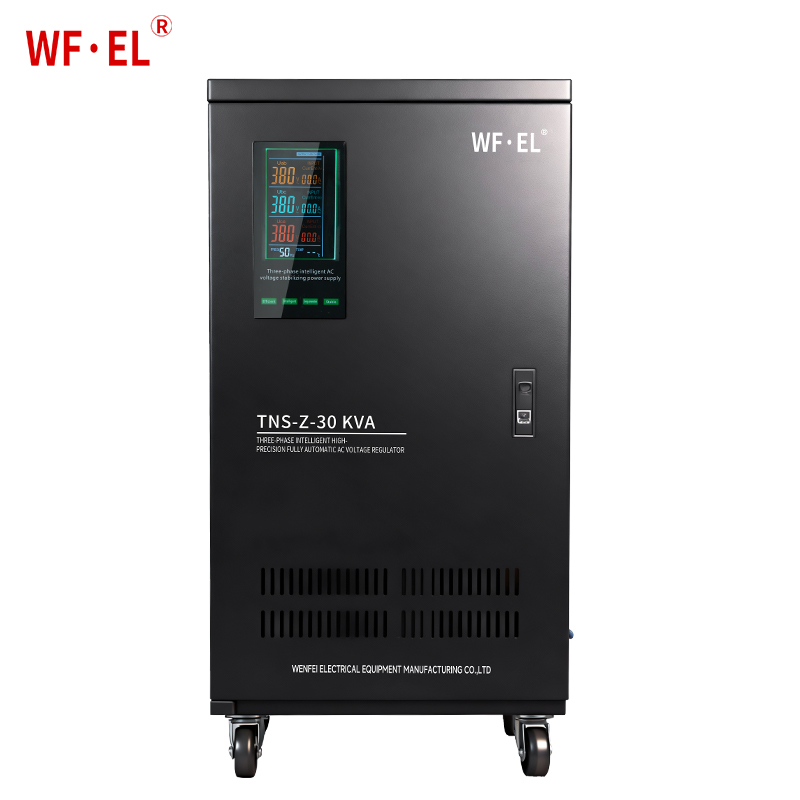
Comprehensive range of dry-type voltage regulators engineered for diverse power requirements
Capacity
Calculator
Determine the optimal transformer capacity for your application
Based on your requirements, we recommend the above voltage regulator capacity. Contact our technical team for detailed specifications and customization options.
Get Custom Quote
Client
Testimonials
Real-world performance in critical applications
Frequently Asked
Questions
Technical answers about dry-type voltage regulators
What makes dry-type regulators safer than oil-immersed units?
How does moisture resistance work in dry-type regulators?
What maintenance do dry-type voltage regulators require?
Can dry-type regulators handle overload conditions?
What are the noise levels of dry-type regulators?
How do dry-type regulators perform in high-altitude locations?
Are dry-type regulators suitable for harmonic-rich loads?
What is the expected lifespan of dry-type voltage regulators?
Technical
Reference
Comprehensive guide to dry-type voltage regulator technology
What Are Dry-Type Voltage Regulators?
Dry-type voltage regulators are automatic voltage stabilization devices that use epoxy resin cast insulation instead of liquid dielectrics. The term "dry-type" distinguishes them from oil-immersed regulators. Windings are encapsulated in epoxy resin under vacuum pressure, creating a solid insulation system that is moisture-proof, fire-resistant, and environmentally safe. They maintain constant output voltage (typically ±1-2%) despite input voltage fluctuations of ±15-30%, protecting sensitive equipment from voltage-related damage.
Construction Technology
Epoxy Resin Casting
Vacuum pressure gelation (VPG) eliminates air voids in epoxy resin, ensuring uniform insulation. Windings are cast in precision molds at controlled temperature and pressure. Cured resin provides mechanical strength, moisture barrier, and thermal conductivity. Class F (155°C) or H (180°C) insulation systems standard.
Core Design
High-grade silicon steel laminations (0.27mm or 0.23mm thickness) reduce core losses. Step-lap or mitred corner joints minimize magnetic reluctance. Low flux density (1.4-1.5T) reduces magnetostriction noise and improves voltage regulation accuracy. Cores are coated for corrosion resistance.
Winding Configuration
Copper or aluminum conductors with high thermal conductivity. Concentric or sandwich winding arrangements optimize voltage regulation. Multiple taps (typically 17-33 positions) provide fine voltage adjustment. Automated winding machines ensure precise turn-to-turn spacing and layer insulation.
Cooling System
Natural air convection (AN) for units up to 500kVA. Forced air cooling (AF) for larger capacities or space-constrained installations. Aluminum or copper heat sinks increase surface area. Temperature sensors (PT100 RTDs) monitor winding and core temperatures, triggering alarms or shutdown at preset limits.
Technical Specifications
| Parameter | Standard Range | High-Performance |
|---|---|---|
| Voltage Class | 10kV, 20kV, 35kV | Up to 110kV (custom) |
| Capacity Range | 30-2500 kVA | Up to 5000 kVA |
| Input Voltage Range | ±15% to ±25% | ±30% (wide range) |
| Output Accuracy | ±2% | ±1% (precision) |
| Efficiency | > 97% | > 98.5% |
| Insulation Class | F (155°C) | H (180°C) |
| Temperature Rise | 100K (winding) | 80K (low-temp) |
| Noise Level | 50-60 dB | 45-50 dB (low-noise) |
| Protection Class | IP20 (indoor) | IP54 (outdoor enclosure) |
| Altitude Rating | ≤ 1000m | ≤ 3000m (derated) |
Selection Criteria
1. Safety Requirements
Choose dry-type regulators when fire safety is paramount: high-rise buildings (especially above 10th floor), hospitals, data centers, airports, underground installations, and densely populated areas. Building codes often mandate non-flammable equipment in these locations. Dry-type units eliminate oil leak risks and associated environmental liability.
2. Environmental Conditions
Assess ambient temperature (standard: -10°C to 40°C), humidity (dry-type handles up to 95% RH), altitude (derate above 1000m), and pollution levels. Coastal or industrial environments may require conformal coating on terminals. For outdoor use, specify IP54 enclosures with weatherproof construction. Seismic zones require earthquake-resistant mounting.
3. Load Characteristics
Analyze load type (resistive, inductive, capacitive), power factor, harmonic content, and starting currents. For non-linear loads (VFDs, UPS), specify K-factor rated units. For motor starting, account for 6-8× inrush current. Calculate total connected load, diversity factor, and future expansion (typically 20-30% margin). Consider load growth over 10-year planning horizon.
4. Space and Weight Constraints
Dry-type regulators are 20-30% more compact than oil-immersed equivalents. Verify floor loading capacity (typical: 500-800 kg/m² for large units). Ensure adequate clearances for ventilation (minimum 0.5m all sides for natural cooling, 0.3m for forced-air). Consider lifting points and access for installation and future replacement.
Installation Guidelines
- 1. Foundation and Mounting: Install on level, vibration-free surface capable of supporting 150% of unit weight. Use anti-vibration pads for noise-sensitive areas. Anchor to floor using M12-M16 bolts per seismic requirements. Maintain minimum clearances: 0.5m sides, 1.0m front (for access), 0.3m rear.
- 2. Ventilation Requirements: Natural cooling requires unobstructed airflow from bottom to top. Do not block ventilation openings. Room temperature must not exceed 40°C. For forced-air units, ensure fan intake is free from obstructions. In confined spaces, provide mechanical ventilation (calculate heat dissipation: kVA × loss % × 3.6 = kW heat load).
- 3. Electrical Connections: Use cable lugs rated for connection temperature (typically 75°C or 90°C). Torque terminals per manufacturer specifications (over-torquing damages epoxy, under-torquing causes heating). Install properly sized circuit breakers or fuses on input (1.5× rated current). Verify phase sequence matches load requirements (especially for three-phase motors).
- 4. Grounding and Bonding: Connect regulator frame to building ground grid using minimum 16mm² copper conductor. Ensure ground resistance < 4Ω. Bond all metallic enclosures and cable armor. For IT grounding systems, install insulation monitoring device. In TN-C-S systems, separate neutral and ground at regulator terminals.
- 5. Protection Coordination: Coordinate upstream and downstream protective devices to ensure selectivity. Install surge protection devices (SPDs) on input side (Type 2, 40kA 8/20μs). For critical loads, implement automatic transfer switch (ATS) to bypass regulator during maintenance. Add under-voltage and over-voltage relays for load protection.
- 6. Commissioning Tests: Perform pre-energization checks: insulation resistance (minimum 1000V megger, reading > 10MΩ), winding resistance, turns ratio, and polarity. Energize at no-load, verify output voltage and phase sequence. Apply 25%, 50%, 75%, and 100% load steps, monitoring voltage regulation, temperature rise, and noise. Document baseline parameters for future comparison.
Maintenance Best Practices
- • Visual inspection for damage
- • Check ventilation openings
- • Verify indicator lights
- • Listen for unusual noise
- • Monitor input/output voltage
- • Record temperature readings
- • Clean ventilation surfaces
- • Inspect electrical connections
- • Check terminal tightness
- • Test protection relays
- • Thermal imaging scan
- • Verify cooling fan operation
- • Insulation resistance test
- • Voltage regulation accuracy
- • Load loss measurement
- • Temperature rise test
- • Partial discharge test (optional)
- • Comprehensive inspection report
Wenfei Dry-Type Advantage
Wenfei Electrical's dry-type voltage regulators combine German VPG casting technology with precision Japanese silicon steel cores. Our 10,000m² facility in Liushi--China's electrical equipment manufacturing hub--houses automated winding machines, vacuum casting stations, and climate-controlled curing ovens. Every unit undergoes 72-hour burn-in testing at 110% rated load, ensuring zero infant mortality failures.
We offer customization for extreme environments: IP65 weatherproof enclosures for offshore platforms, seismic-rated construction for earthquake zones, low-temperature variants (-40°C) for Arctic installations, and harmonic-rated designs for data centers. ISO 9001 quality management and CE certification ensure consistent performance. With over 8,000 dry-type regulators deployed globally, Wenfei delivers proven reliability for mission-critical power infrastructure.
REQUEST A
QUOTE
Get detailed specifications and pricing for your dry-type voltage regulator project
Request A
Quote
Get in touch with our technical team to discuss your power solution requirements. We provide customized quotations and engineering support.
Liushi Town, Wenzhou, Zhejiang, China